%label%
%sku%%description%
When infrastructure demands strength, longevity and sustainability, conventional retaining systems often fall short. Flex MSE® is a vegetated wall system that has 97% lower embodied greenhouse gas emissions than concrete, installs in significantly less time, and is ASTM rated for a 120-year design life.
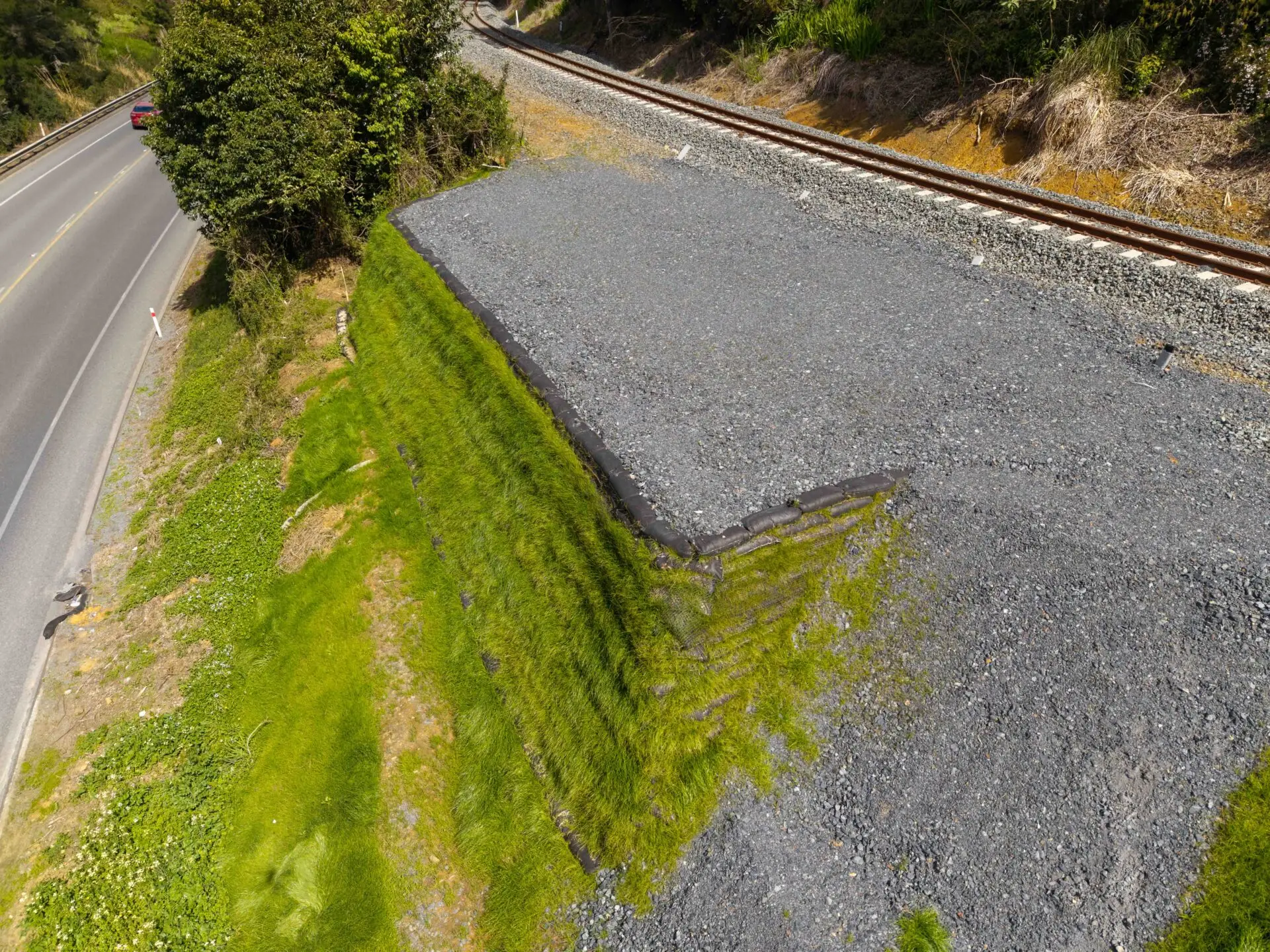
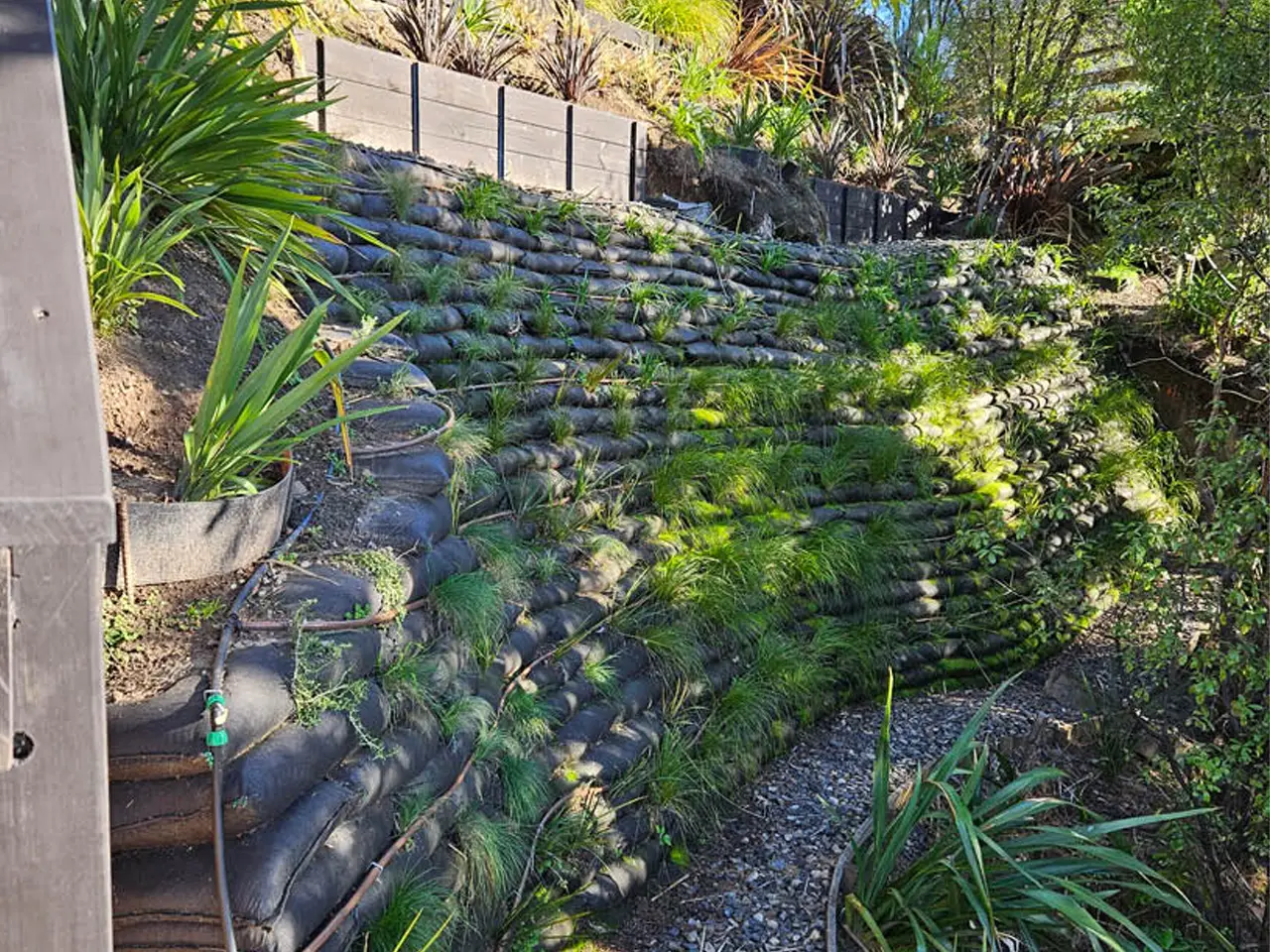
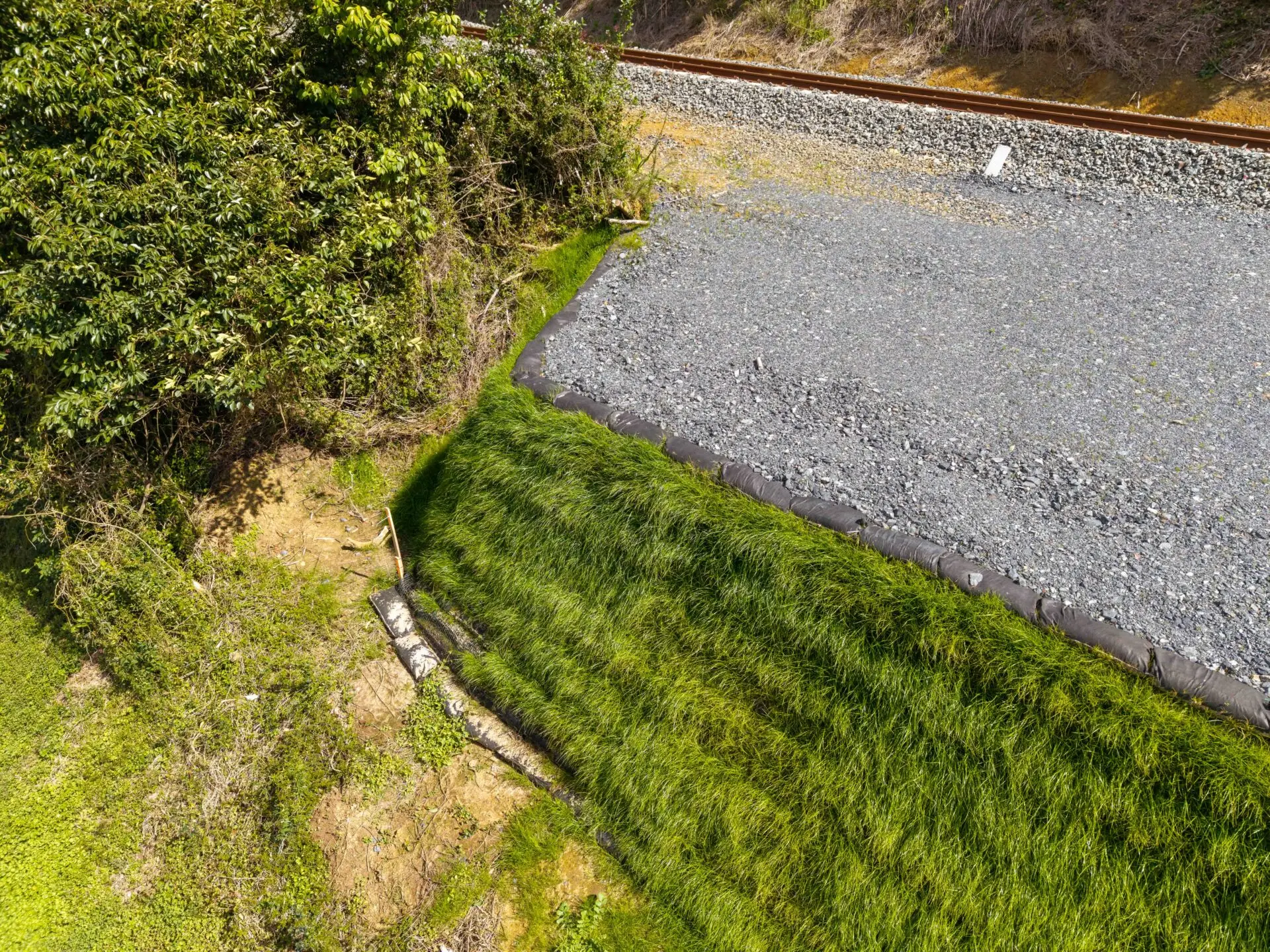
From transport corridors to urban developments and difficult access sites, Flex MSE delivers engineered performance with a natural finish, through being live planted or hydroseeded.
In this article we explore:
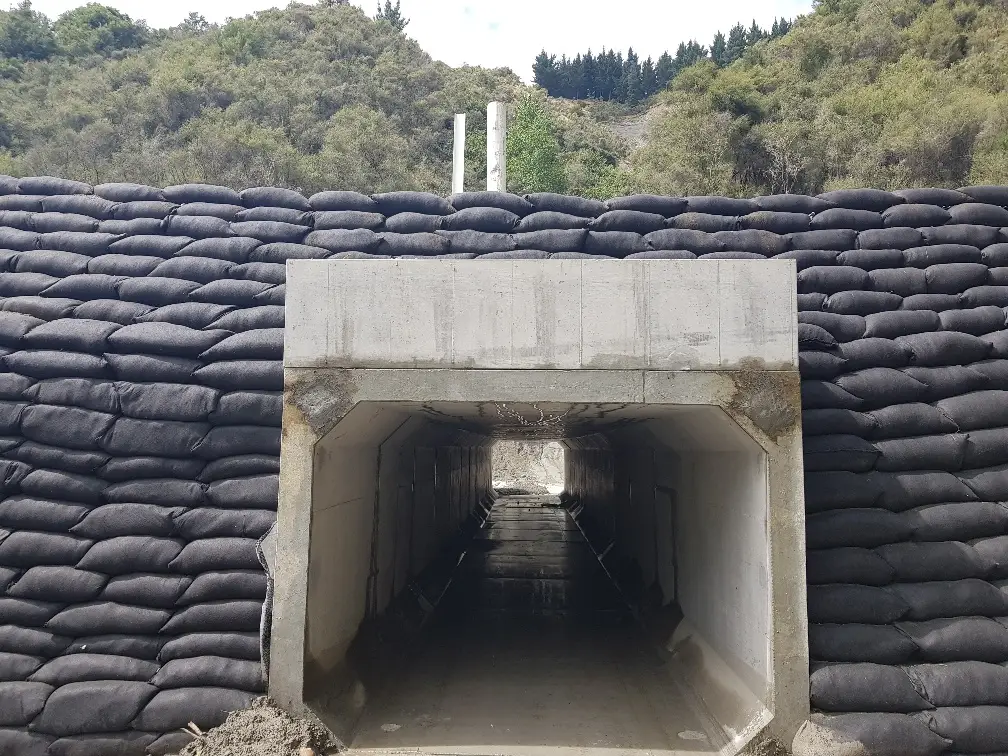
Flex MSE is an engineered vegetated retaining wall system that combines geotextile technology with Mechanically Stabilised Earth (MSE) principles. The system uses high-strength geobags and plates to create a modular structure that behaves like a “soft” material during installation, yet performs like a “hard” structure once complete.
The result is a retaining wall that:
It is also backed by a long-term system warranty and certified Environmental Product Declaration (EPD), supporting sustainability-led projects.
Flex MSE is particularly well suited to projects where:
1. Carbon Reduction Matters
Councils, infrastructure providers and developers increasingly need to demonstrate lower embodied carbon. With 97% less greenhouse gas than concrete alternatives, FlexMSE aligns strongly with sustainability targets.
2. Access Is Limited
Because the system is modular and lightweight compared to precast or concrete block walls, it’s ideal for:
3. Settlement Is a Risk
Flex MSE can withstand almost unlimited differential settlement, making it ideal for sites with variable subgrade conditions.
4. A Natural Finish Is Required
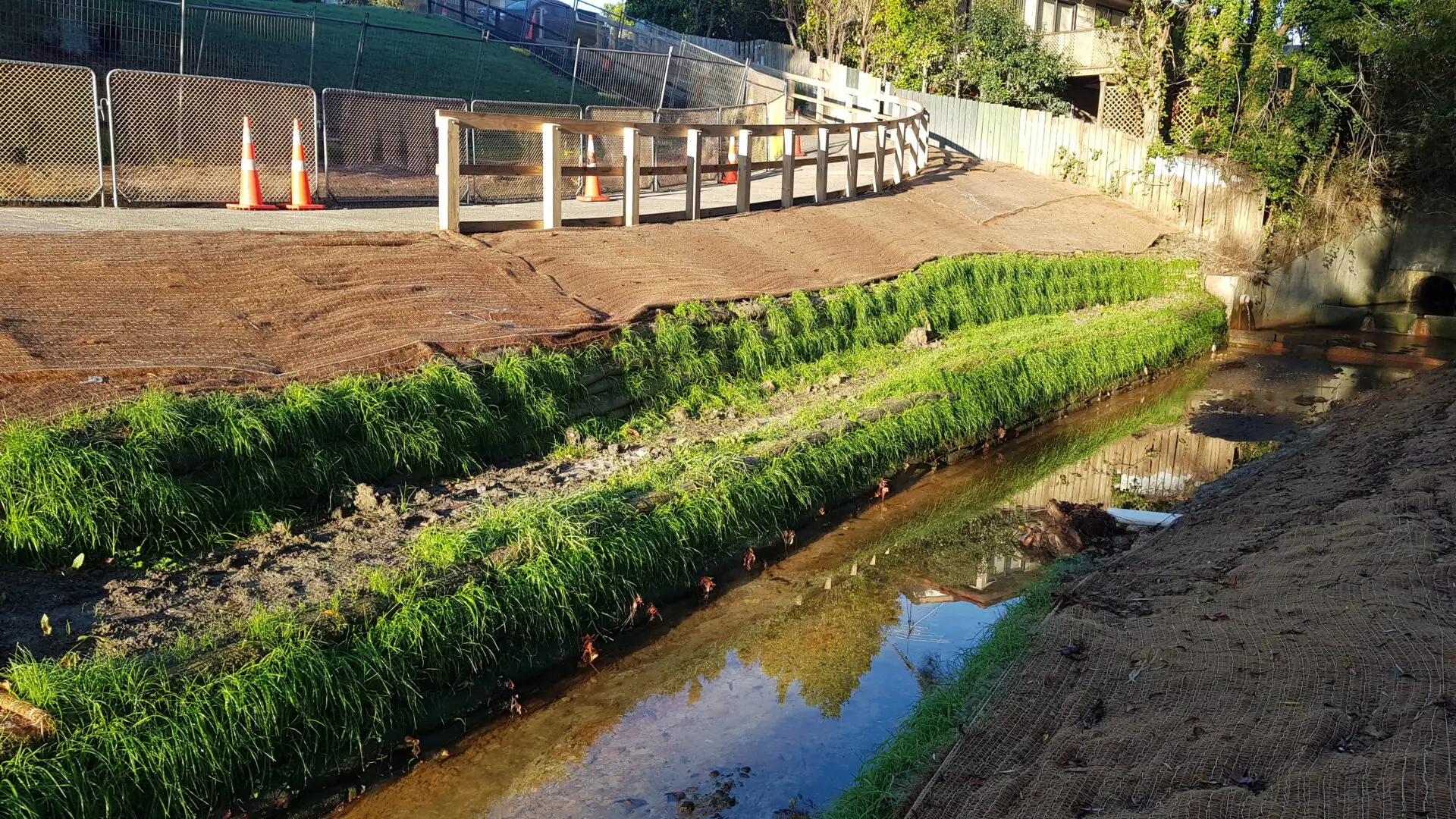
Unlike hard-faced retaining systems, Flex MSE is designed to be planted or hydroseeded, blending into the landscape once established.
For projects where landscape integration is as important as engineering performance, this is a major advantage.
Time and simplicity are two of Flex MSE’s biggest strengths.
Faster Build Times
Flex MSE walls install in approximately ½ to ⅔ the time of conventional systems.
This translates to:
Simpler Construction
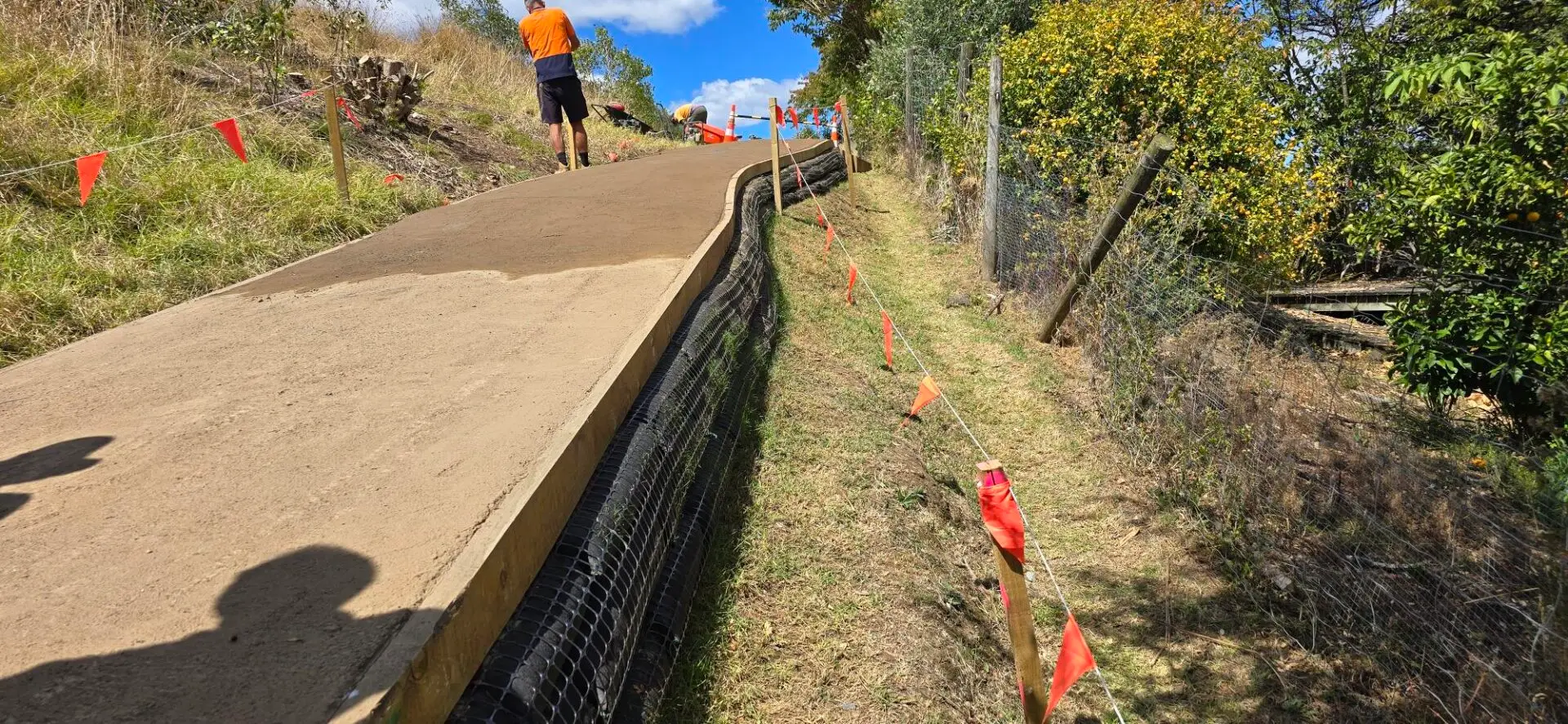
From professional contractors to capable civil crews, the system uses a straightforward layered methodology with geogrid reinforcement where required.
Because the bags are modular and adaptable, construction is efficient even on complex geometries.
Cost and Carbon Comparison
When evaluating retaining wall systems, initial material cost is only one part of the equation.
Embodied Carbon
Concrete retaining walls are carbon intensive. Flex MSE reduces greenhouse gas emissions by 97% compared to traditional concrete systems.
For projects with ESG reporting or Net Zero objectives, this is a measurable, reportable advantage.
Whole-of-Life Value
With a 120-year design life and a long-term system warranty, lifetime costs can be significantly lower than conventional systems.
Add to this the savings in labour, machinery and transport, and FlexMSE® often becomes the more cost-effective solution overall.
Across New Zealand, specifiers are increasingly seeking systems that:
Flex MSE achieves all of the above while offering a natural, living façade. Once vegetated, the wall strengthens over time and becomes part of the environment rather than a hard intrusion.
At Advance Landscape Systems, we also work alongside licensed engineers and architects to provide comprehensive design support when specifying a Flex MSE wall.
That combination of technical backing, sustainability performance and practical constructability is why Flex MSE is gaining traction across transport, urban development and civil infrastructure projects.
Retaining structures no longer need to be heavy, carbon-intensive concrete elements.
Flex MSE represents a shift toward systems that are:
As infrastructure evolves to meet climate and sustainability expectations, vegetated MSE systems are becoming the intelligent choice.
Learn more about Flex MSE here.
Interested in specifying Flex MSE® on your next project?
Contact our team for technical documentation, design support and project consultation.
We’re here to help you deliver retaining solutions that protect, nurture and sustain.

Our trade account customers enjoy regular purchasing options with prompt service and competitive trade pricing. They also gain access to our exclusive, customised products tailored to their needs. Conditions apply to qualify for a trade account — contact our team today to learn more!
For large projects or landscaping jobs, you can easily submit a bulk pricing request. Our team will review your needs and get in touch with a tailored quote. We’re here to help you get the best value for your project.