%label%
%sku%%description%

Planters can do far more than hold plants.
Used deliberately, a planter can define an entrance, guide movement, create privacy, divide outdoor areas or introduce planting where there is no garden bed.
For both residential and commercial landscapes, planters can become useful spatial-design tools.
Here are some ways Archipello. planters can help shape an outdoor space.
Entrances benefit from clear visual cues.
A planter positioned beside a front door, garden gateway or commercial entrance can:
For a symmetrical entrance, matching planters can create formality.
For a more relaxed landscape, one larger feature planter may provide enough visual weight on its own.

Outdoor spaces often need separation without becoming enclosed.
For example, a homeowner may want to distinguish a dining area from a lawn, or a hospitality venue may want to separate customer seating from pedestrian movement.
Planters can create that boundary while retaining openness.
This can be useful for:
Longer trough-style planters are particularly useful where a stronger linear boundary is required.
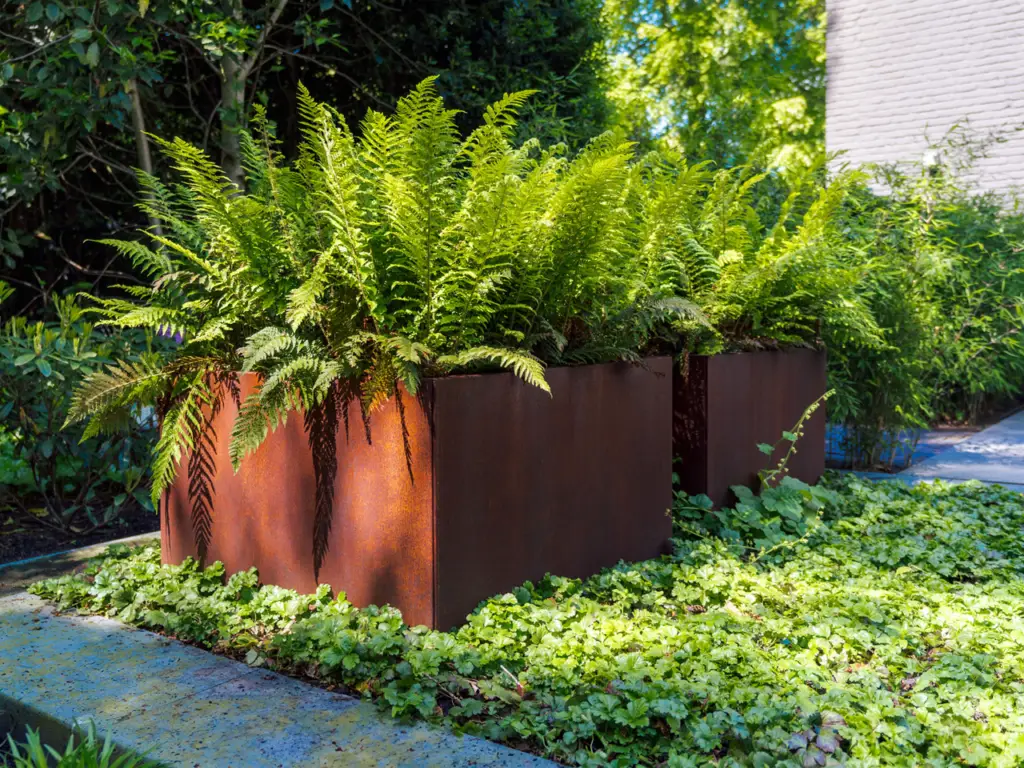
Large paved, concrete or decked spaces can sometimes feel visually hard.
Planters allow vegetation to be introduced without removing or rebuilding those surfaces.
Positioning a planter alongside:
can create a transition between architecture and planting.
The planter itself can also contribute through its shape, material and finish.

Some outdoor spaces need one strong element to organise everything around it.
A feature planter can create that focal point.
Consider positioning it:
The scale matters.
In a larger outdoor area, several small pots can disappear visually. One substantial planter may create a stronger and more deliberate result.
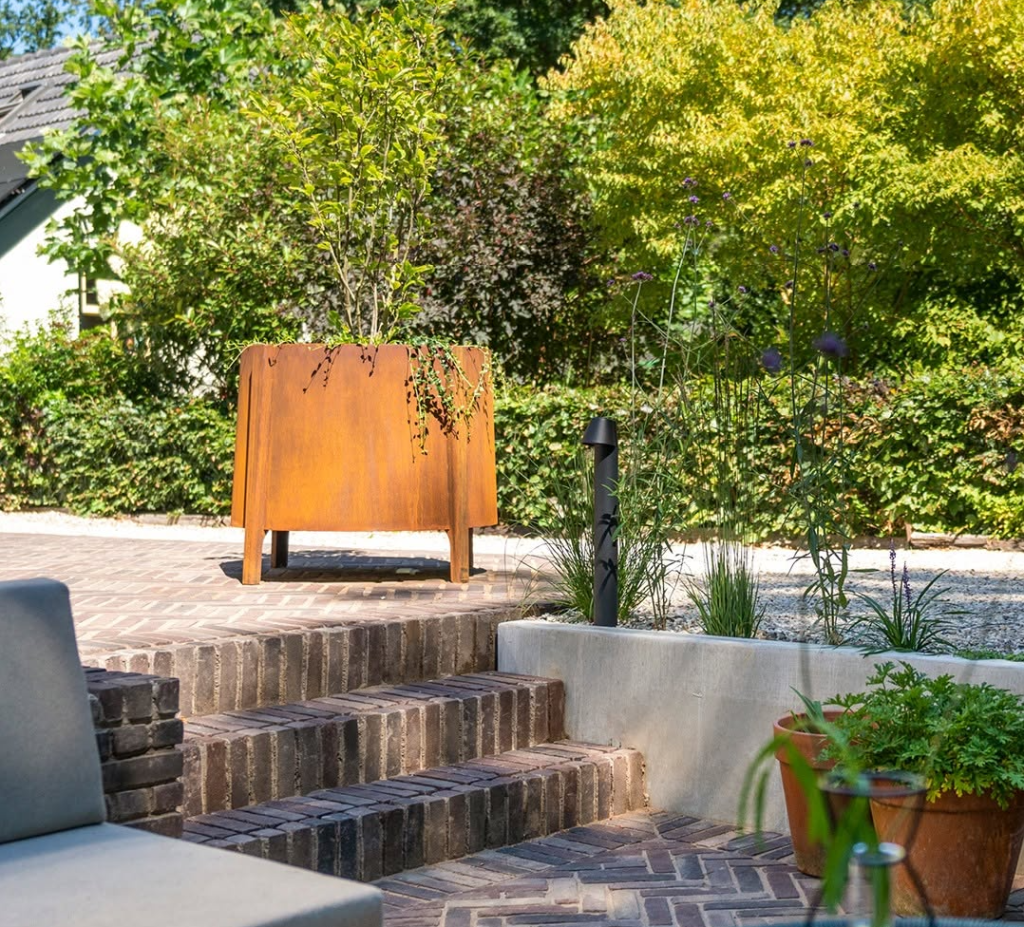
Landscape design is partly about deciding how people move.
Planters can help influence circulation without relying on fences or physical walls.
They can:
This is especially useful in hospitality and commercial landscapes where circulation needs to remain intuitive.
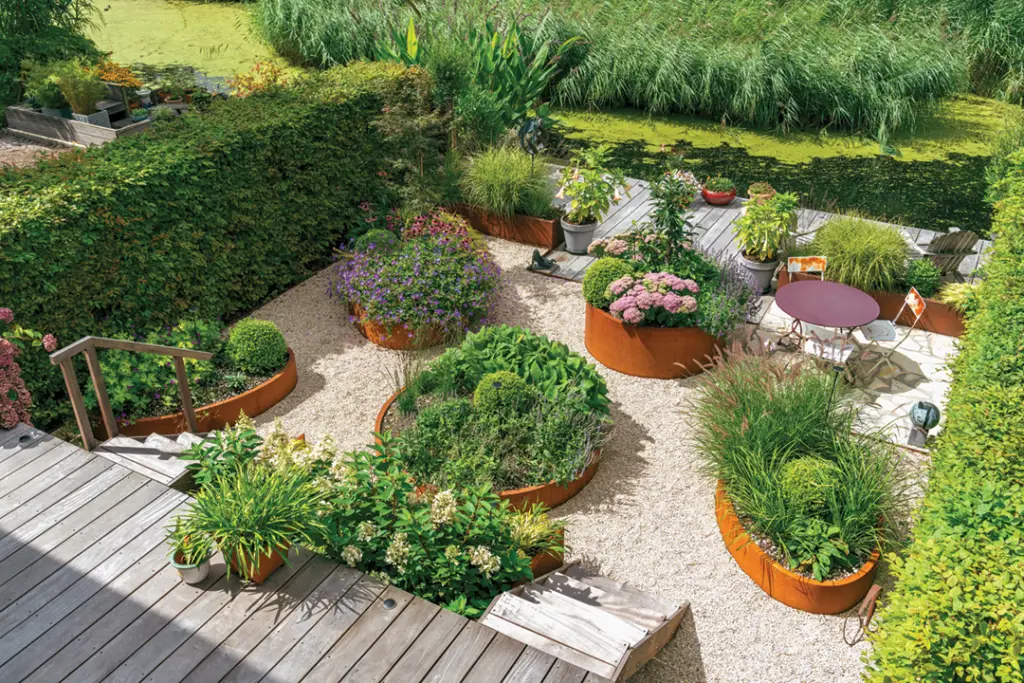
Planters can create privacy without making an outdoor space feel enclosed.
The planter provides the structure while the planting provides the screen.
This can work well between:
Plant selection is important. Tall grasses, shrubs or structured foliage can provide screening while still allowing planting to feel integrated into the wider landscape.
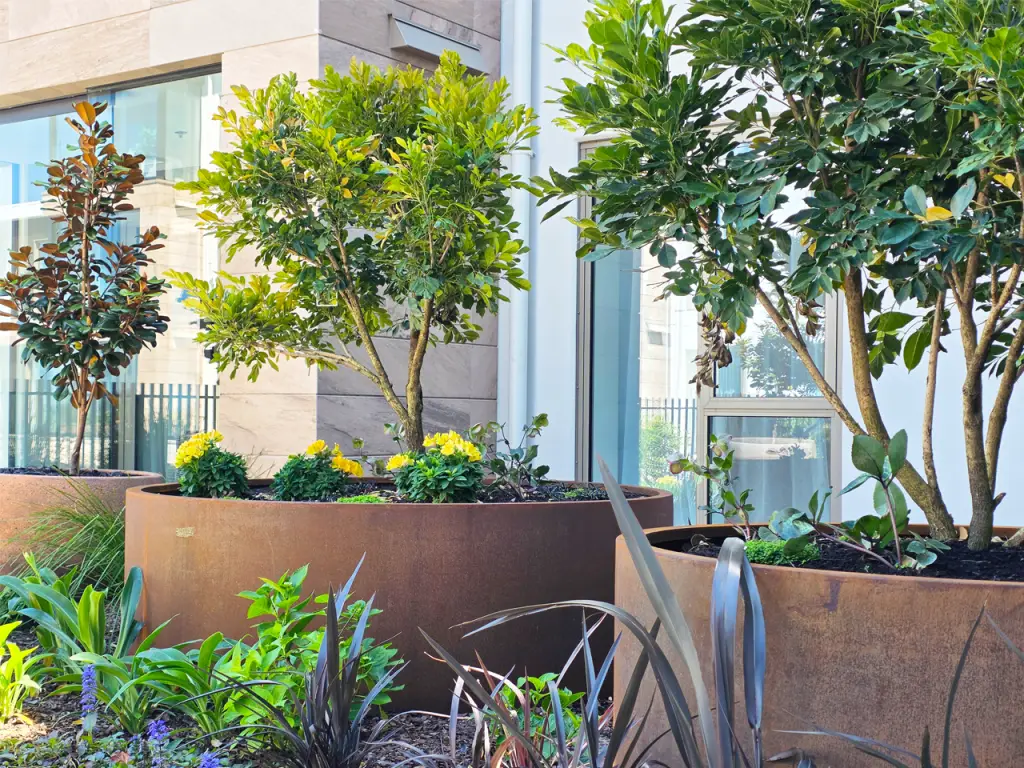
Not every outdoor area has access to deep garden soil.
Planters can introduce planting onto:
This makes them particularly useful in architectural landscapes where hard surfaces form a large part of the site.

Repetition can help separate areas feel connected.
Using the same planter style or finish at several points through a landscape can establish a visual rhythm.
For example:
The planting can vary while the planter provides continuity.
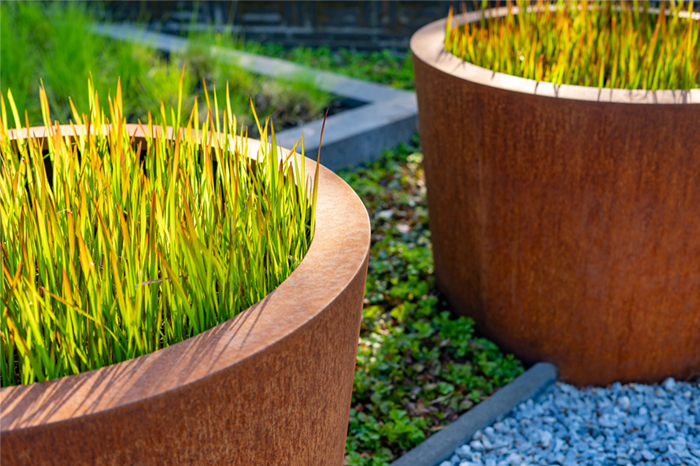
Planter geometry influences how it interacts with a space.
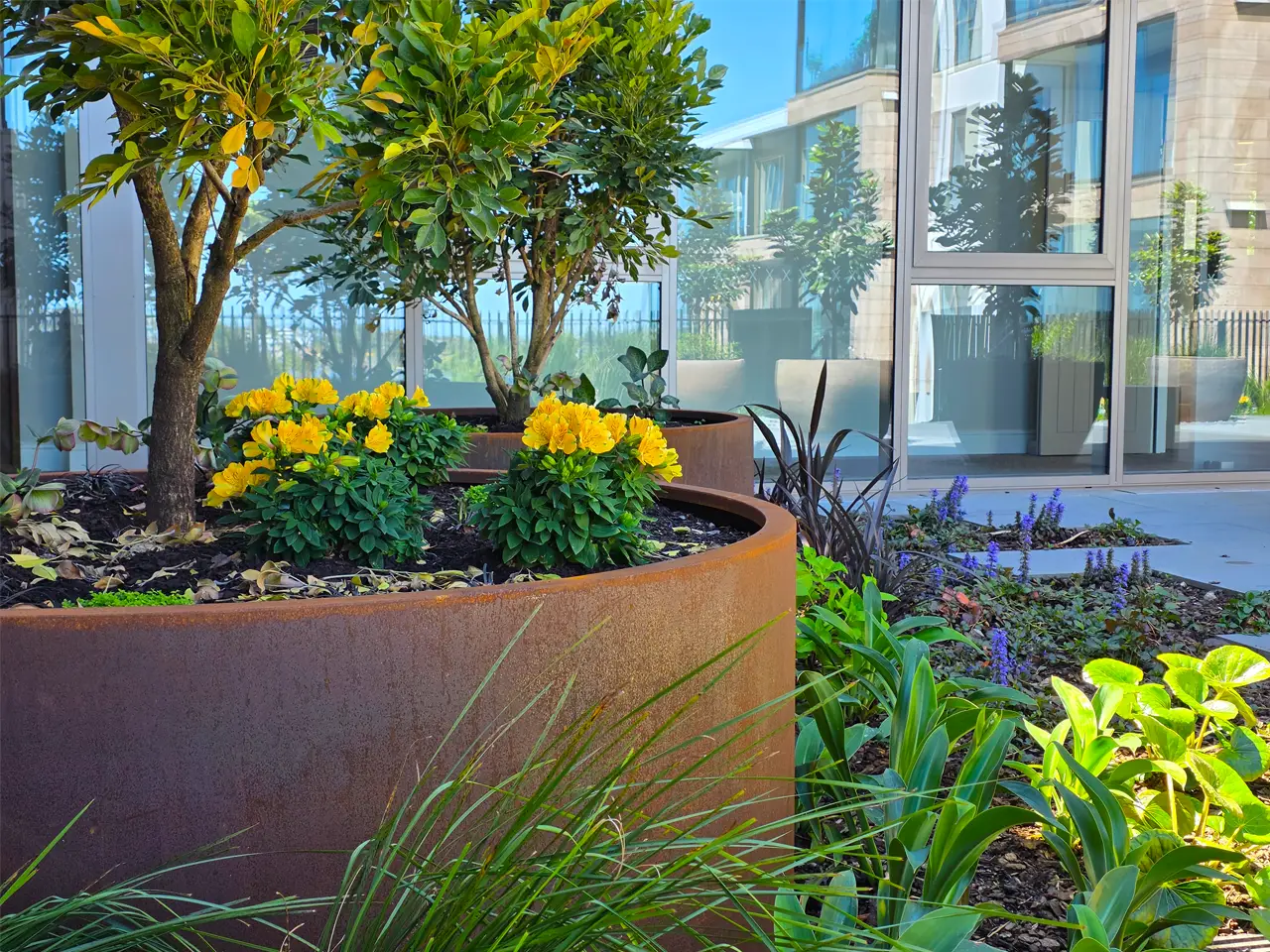
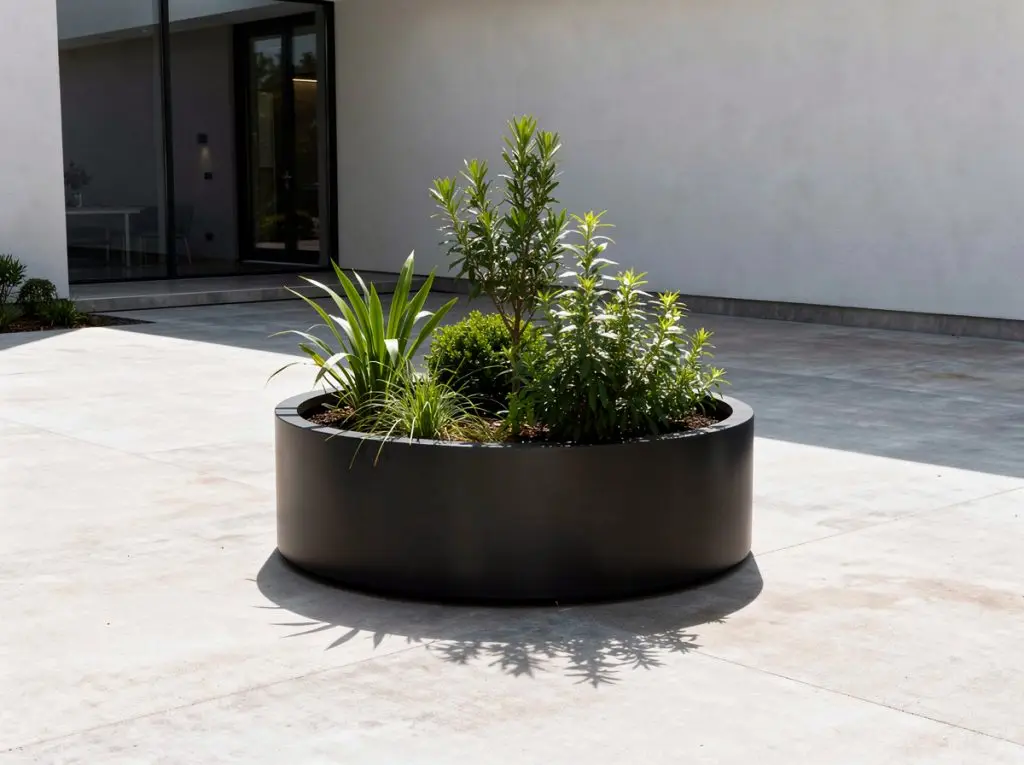
Circular forms can soften hard architectural lines and work particularly well as standalone focal points.
Square forms can align strongly with architectural grids and entrances.
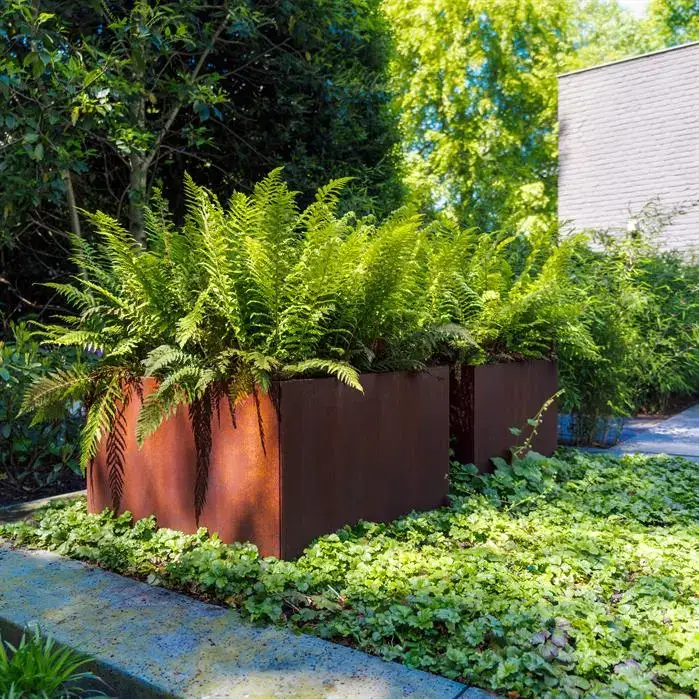
Longer trough forms can define boundaries, provide screening or separate outdoor zones.
More distinctive planter shapes can become focal elements in their own right.
The Archipello. collection includes forms such as Circum, Carrez Connect, Ellipse, Boxer and Onyx, allowing designers and homeowners to select a shape based on the role it needs to play.
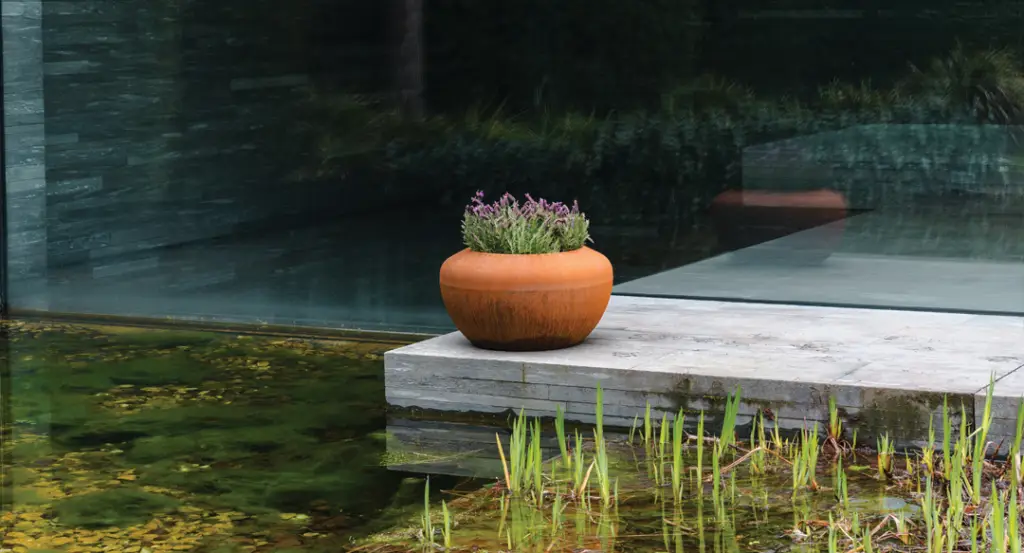
They do not have to match exactly, but some visual connection usually helps.
That connection could come from:
For example, a Corten planter can relate to Corten edging elsewhere in the garden.
A powder-coated planter might coordinate with architectural joinery, fencing or outdoor furniture.
The goal is to make the planter feel deliberately selected rather than added as an isolated object.
Archipello. planters are available across Corten and selected coated-steel options.
Corten develops a warm patina as it weathers and works naturally alongside planting, timber, stone and neutral landscape materials.
Powder-coated finishes allow stronger coordination with an architectural colour scheme and can create a cleaner contemporary expression.
The right option depends on the surrounding materials and the role the planter needs to play.
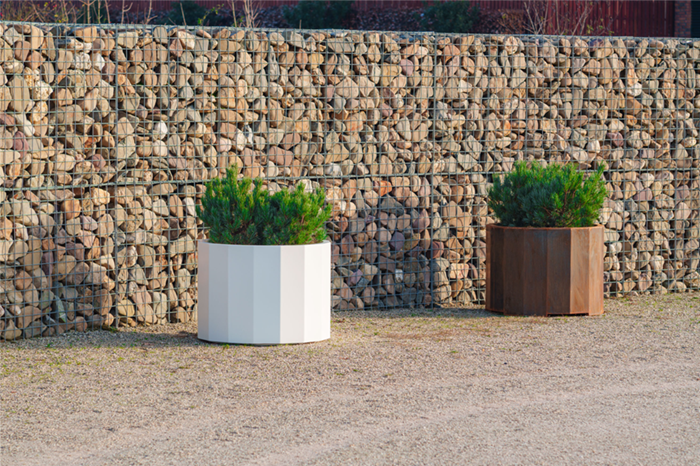
Yes. Larger planters and troughs can visually separate outdoor zones while retaining an open feel.
Longer trough-style planters generally provide the most useful base for linear screening, although planting choice is equally important.
Yes. One appropriately scaled feature planter can create a stronger focal point than several small pots.
Yes. Planters can be used to organise circulation, frame entrances, create screening and introduce greenery into hard-surfaced commercial and hospitality areas.
Archipello. products are backed by a 10-year warranty.
The starting question should not be:
Which planter do I like?
Instead ask:
What does this part of the landscape need?
Does it need a focal point?
Screening?
A clearer entrance?
Separation?
More greenery?
A softer edge?
Once the spatial role is clear, choosing the planter becomes much easier.
Explore the Archipello. planter collection or talk to Advance Landscape Systems about the right form, scale and finish for your outdoor space or project.