%label%
%sku%%description%

How can an existing timber retaining wall be replaced along a stream bank where access is limited and the surrounding landscape must be preserved?
At a residential property on Daresbury Lane in Fendalton, Christchurch, the Flex MSE® Vegetated Wall System provided a flexible, plantable solution for replacing an existing timber retaining wall alongside the Waimairi Stream.
Designed by Rough Milne Mitchell Landscape Architects (RMM) and constructed by OuterSpace Landscapes, the project involved creating a curved retaining wall that followed the stream’s alignment while working around established trees, existing retaining structures and outdoor living areas.
Supplied by Advance Landscape Systems, Flex MSE was selected for its modular construction, ability to accommodate movement and relatively shallow founding requirements, offering a practical alternative to conventional hard-faced retaining walls in a confined streamside environment.

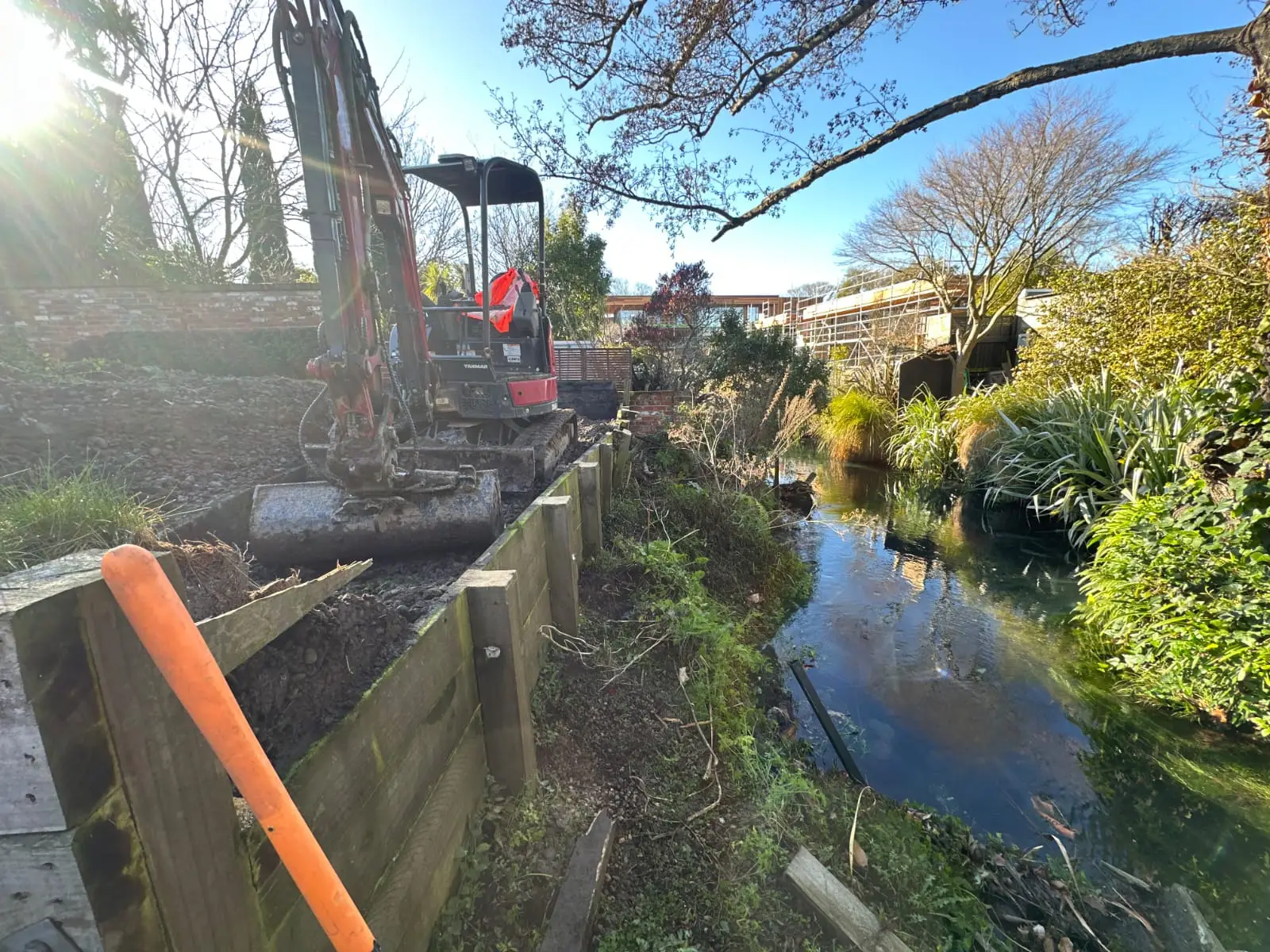
The existing timber retaining wall bordered the Waimairi Stream, a waterway that flows into Christchurch’s Avon River. Replacing the wall required a bank stabilisation solution that could meet the site’s retaining requirements without compromising the surrounding residential landscape.
Access was particularly challenging. Mature trees, established planting, brick boundary walls and outdoor living areas surrounded the work zone, while an existing curved concrete retaining wall above the bank needed to remain in place.
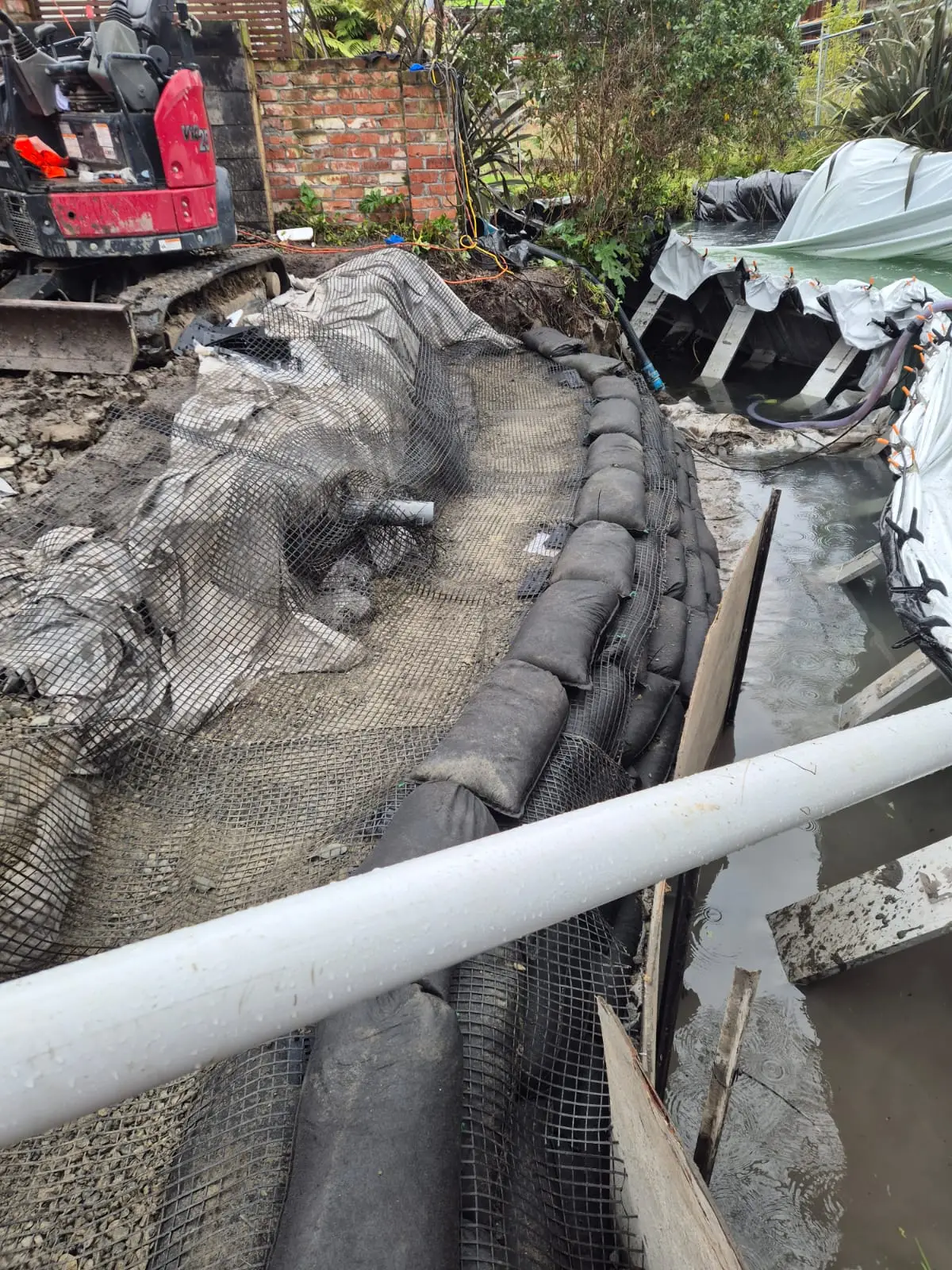
These constraints left limited room for machinery, excavation and material storage. Working immediately beside a flowing stream also introduced water management considerations during construction.
The key challenges included:
The project required a retaining solution that combined structural functionality with design flexibility and the potential for a natural, planted finish.


Advance Landscape Systems supplied the Flex MSE Vegetated Wall System, an engineered retaining solution designed for soil retention, slope stabilisation and erosion control.
Flex MSE uses geotextile bags and interlocking plates to create a modular retaining structure. The system can be configured to follow curves and irregular landforms, making it particularly useful for projects where rigid wall systems may be difficult to accommodate.
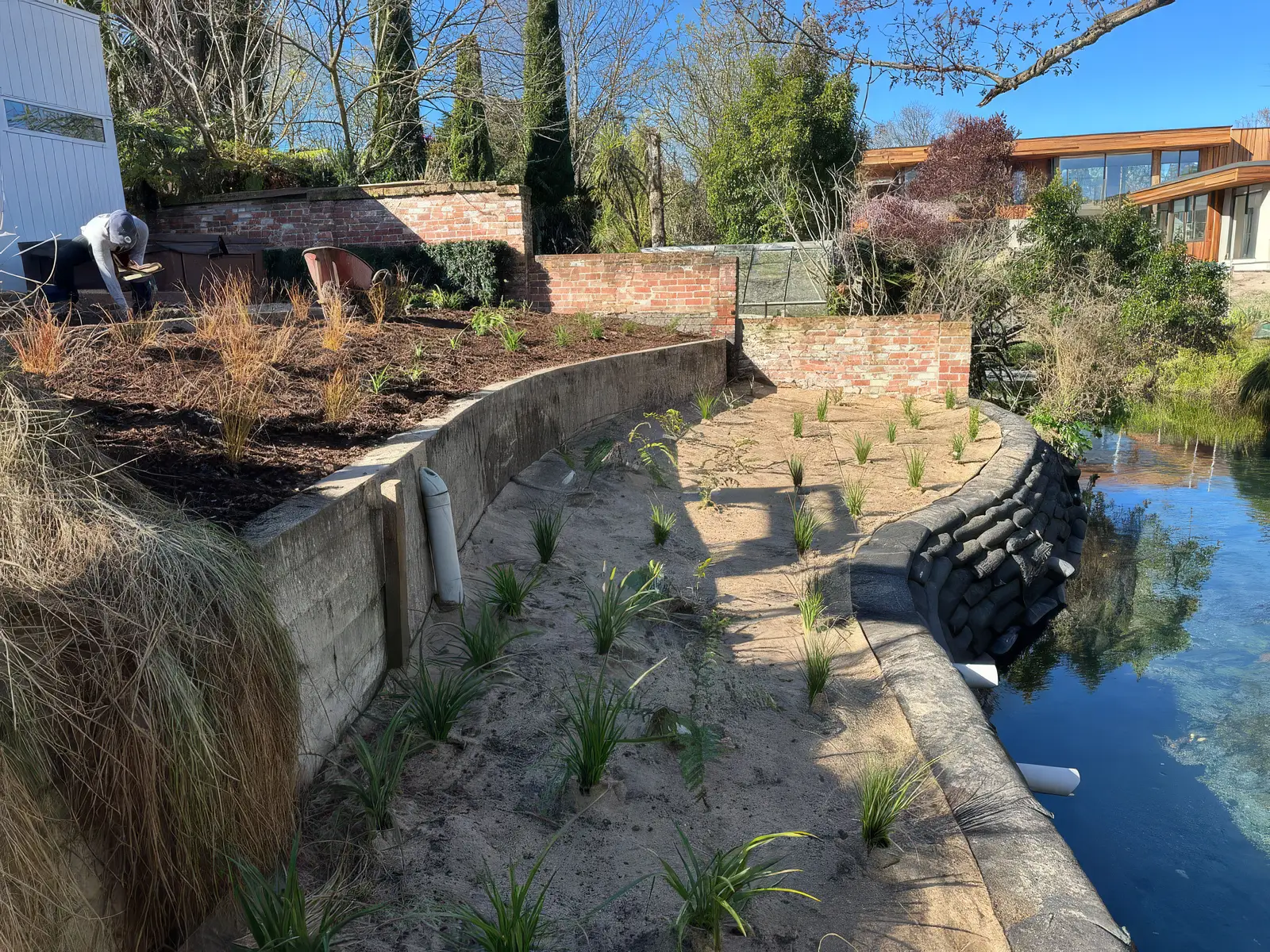
For the Daresbury Lane project, the system allowed OuterSpace Landscapes to construct a smooth, curved retaining wall following the Waimairi Stream’s edge.
Compact excavators were used to remove the existing timber wall and prepare the bank within the restricted working area. The new Flex MSE wall was constructed below the retained concrete wall, fitting into the property’s established landscape layout.
The system’s flexibility and relatively shallow founding requirements were important considerations for a site where extensive excavation would have been difficult. Wall founding and protection against stream scour were addressed through the project-specific design requirements.
Flex MSE offered several advantages for the site’s construction constraints and landscape objectives:
Together, these features provided a retaining solution that supported RMM’s curved landscape design while responding to the practical challenges of the site.
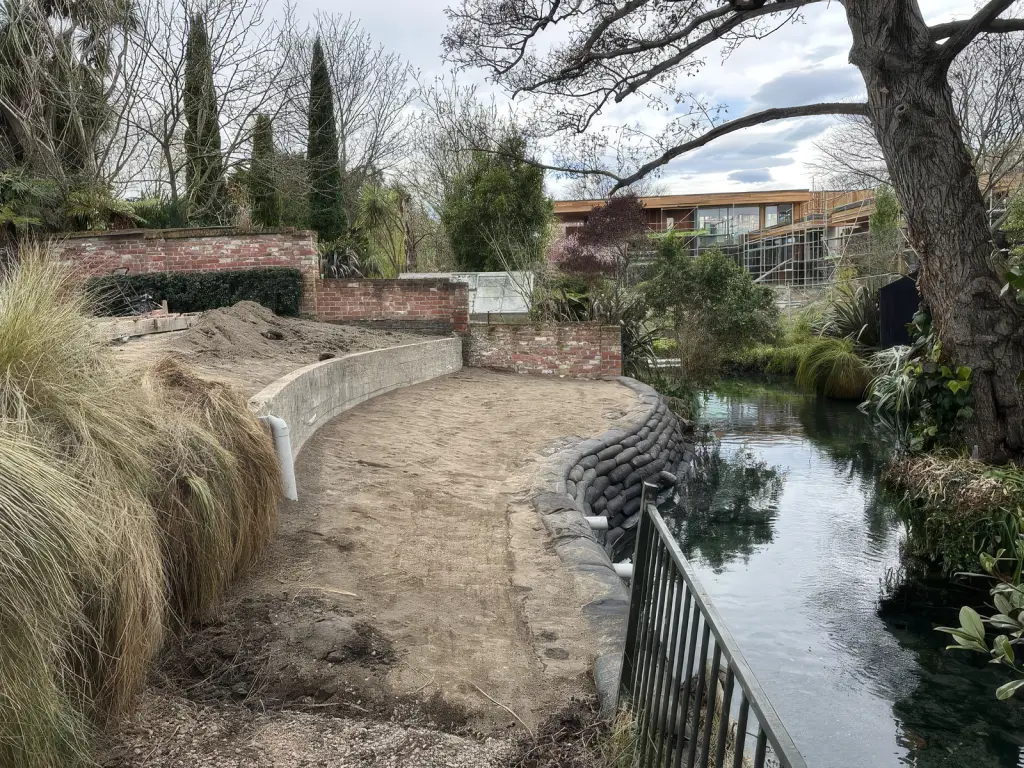
Beyond replacing the existing timber wall, an important objective was to create a retaining structure that would integrate naturally with the streamside landscape.
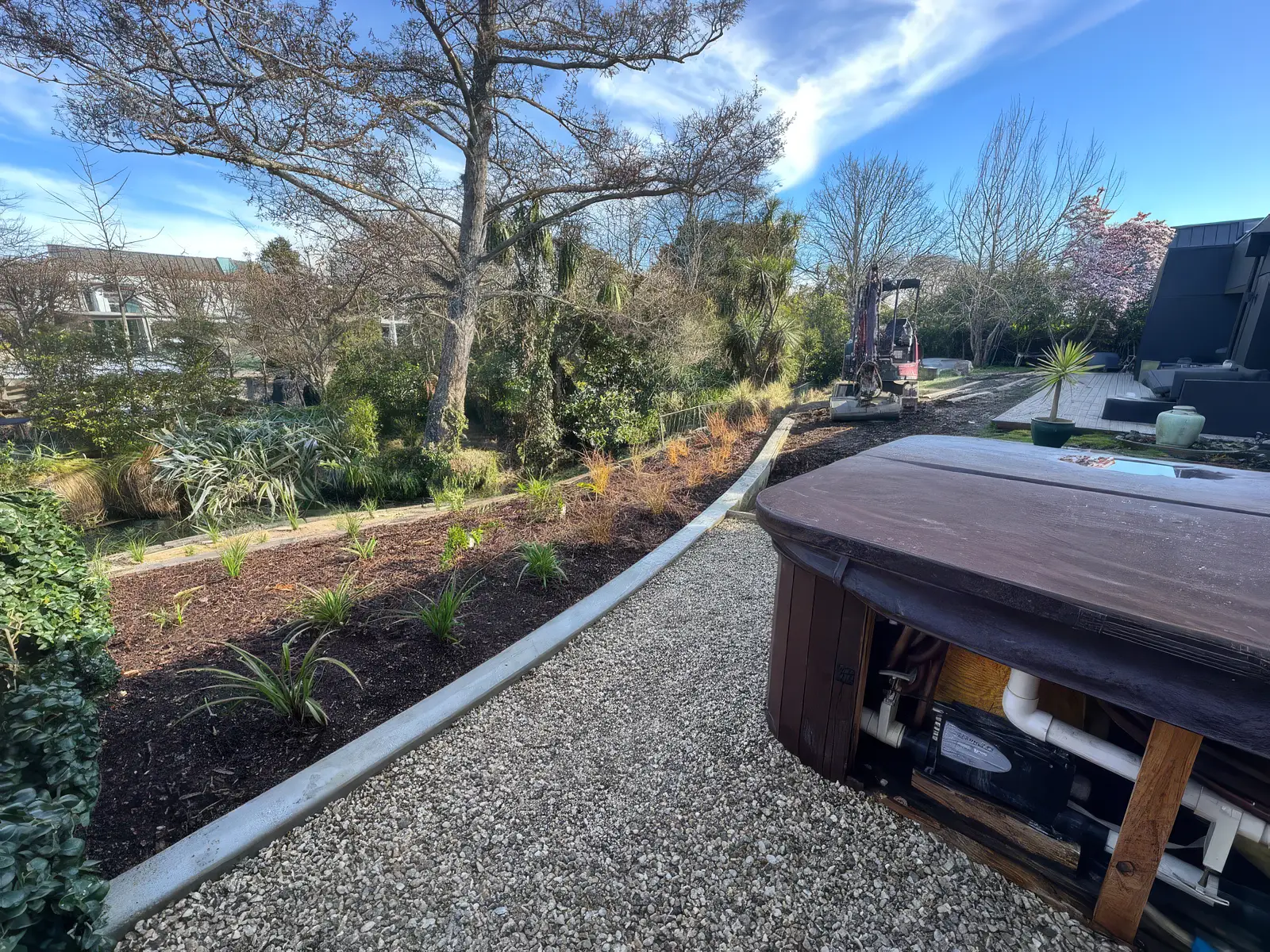
The narrow area between the upper concrete retaining wall and the stream was cleared and replanted, with additional planting and mulch installed in the garden beds above.
The Flex MSE wall is intended to be live-planted directly into the geotextile bags, allowing vegetation to establish within the wall face. Planting above the retaining wall will also grow down over the exposed bags, gradually softening the structure’s appearance.
As the planting develops, the wall is expected to become increasingly integrated with the surrounding vegetation, creating a living stream edge rather than a conventional exposed retaining wall.
Vegetated retaining walls combine engineered soil retention with opportunities for plant establishment.
At Daresbury Lane, Flex MSE provides a retaining structure along the stream bank while allowing vegetation to grow through and across its face.
This approach offers several potential environmental benefits:
The effectiveness of these benefits will depend on the project design, planting establishment and ongoing site conditions.
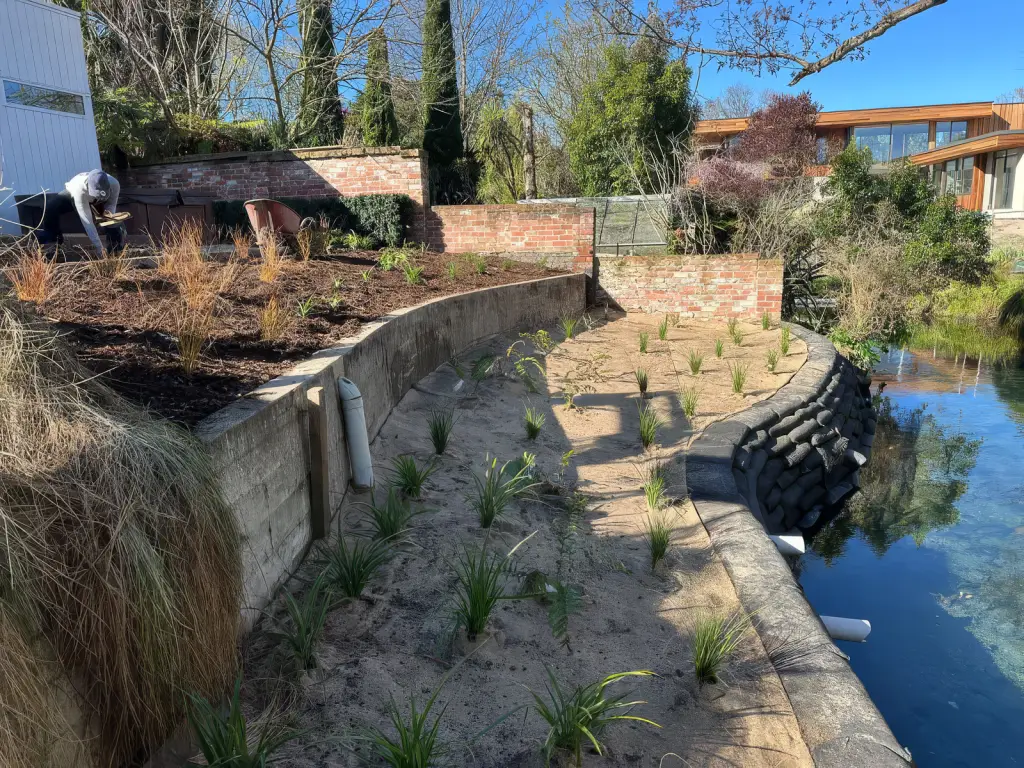
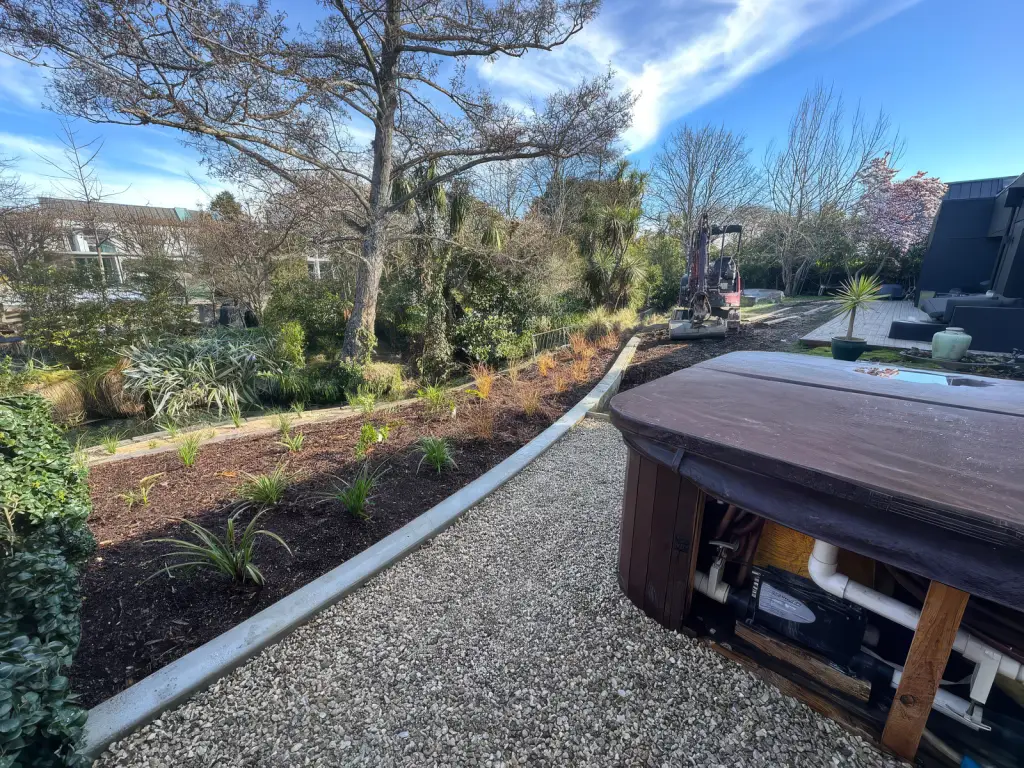
The Daresbury Lane project demonstrates how Flex MSE can be used to replace an existing timber stream bank retaining wall where restricted access, established landscaping and waterway conditions create challenges for conventional construction.
The new curved wall follows the Waimairi Stream’s alignment and fits beneath the property’s existing concrete retaining structure, supporting the landscape design by RMM.
With the wall constructed and surrounding planting in its early establishment stage, the next phase will be the development of vegetation across the wall face. As the planting matures, the structure is expected to blend more naturally with the streamside environment.
For landscape architects, contractors and property owners considering stream bank stabilisation or vegetated retaining walls, this project highlights the versatility of Flex MSE in combining practical retaining requirements with a landscape-led design.
Can Flex MSE be used for stream bank stabilisation?
Yes. Flex MSE is an engineered vegetated retaining wall system suitable for stream bank stabilisation, soil retention and erosion control applications. Its modular construction and plantable facing make it an option for waterways where structural support and landscape integration are both important. Site-specific engineering and scour protection must be considered.
Can Flex MSE retaining walls be built on a curve?
Yes. Flex MSE uses modular geotextile bags and interlocking plates that can be arranged to follow curved alignments and irregular landforms. At Daresbury Lane, the system was used to construct a curved retaining wall along the Waimairi Stream.
Is Flex MSE suitable for retaining walls with restricted site access?
Flex MSE can be particularly useful on restricted-access sites because its modular components can be handled and installed in confined working areas. At Daresbury Lane, compact excavators were used to prepare the bank while working around existing trees, walls and outdoor living spaces.
Can plants grow directly in a Flex MSE retaining wall?
Yes. Flex MSE is designed to support vegetation through live planting or hydroseeding. At Daresbury Lane, the wall is intended to be live-planted directly into the bags, with planting above the wall also expected to grow over its face.
What are the benefits of a vegetated retaining wall beside a waterway?
A properly designed vegetated retaining wall can provide bank support while encouraging vegetation establishment. Potential benefits include reducing erosion, limiting sediment movement, supporting root development and creating a more natural appearance along the waterway.
Interested in specifying Flex MSE® on your next project?
Contact our team for technical documentation, design support and project consultation.
We’re here to help you deliver retaining solutions that protect, nurture and sustain.